FOLLOW US
#sandiegosymphony
When you attend a concert of John Williams’ music, you know at least one thing for certain: you’re going to hear Star Wars. Just like you know, if you attend a Paul McCartney concert, you’ll inevitably hear “Hey Jude.” And no one’s complaining; it doesn’t get better than Star Wars! But it’s also exciting to explore some of the delicious “deep cuts” by this prolific maestro. On July 31 at The Rady Shell at Jacobs Park, the San Diego Symphony and conductor David Newman will guide the audience slightly off the beaten path... before naturally returning to Williams’ most famous hits.
Williams is synonymous with two things: Star Wars, and Steven Spielberg. But the 94-year-old composer has collaborated with many other directors since his career started in the late 1950s—including William Wyler, Alfred Hitchcock, and even Frank Sinatra. One especially important director relationship was with Oliver Stone; Williams scored an informal trilogy about the era of John F. Kennedy and the Vietnam War, beginning with Born on the Fourth of July in 1989—a stoically beautiful lament for solo trumpet and orchestra—and continuing with JFK in 1991.
Their collaboration culminated in 1995 with Nixon, an epic, Shakespearean telling of the rise and fall of the infamous Californian president. But Stone and Williams did not cast Nixon, played by Anthony Hopkins, as a simple cartoon villain; they explored the nuances of a deeply complex, divided man scarred by tragedy and charged with ambition, a man forged by an era of civil unrest and doomed war. Williams stirred Nixon’s Quaker roots, his lust for power, his paranoia, and his nobler aspirations into a stormy, wordless opera that is both terrifying and beautiful, and one of his most magnificent—and largely overlooked—scores.
The composer’s score for another American president, Lincoln, is a study in contrast. For Steven Spielberg’s 2012 drama depicting the passage of the 13th Amendment, Williams dug into the soil of Appalachian folk tunes and the American hymnal for a score that testified to the better angels of one of our finest leaders.
Even with Spielberg—the blockbuster king of Indiana Jones and E.T.—Williams has composed scores that are lesser known. His outrageous send-up of midcentury patriotism gave 1941 a kind of goofy gravitas, and his globetrotting, swashbuckling music for The Adventures of Tintin was like a great bonus Indiana Jones score but with its own jazzy and extra-carbonated personality. On the more dramatic side was Minority Report—a futuristic conspiracy thriller, haunted by murder and loss, that crescendoes with a cathartic and melodic release.
The offbeat path of John Williams is a deeply rewarding one, but all roads do lead back to Steven Spielberg—with whom Williams just scored his 30th feature film, Disclosure Day—and to the galaxy of Luke Skywalker. And why not? Star Wars has given Williams a cosmic canvas to paint a nine-cycle space opera, full of brassy heroism and mystic spirituality and romance. It’s an unparalleled legacy of myth and music—which unbelievably turns 50 next year—and one that is always worth re-entry.
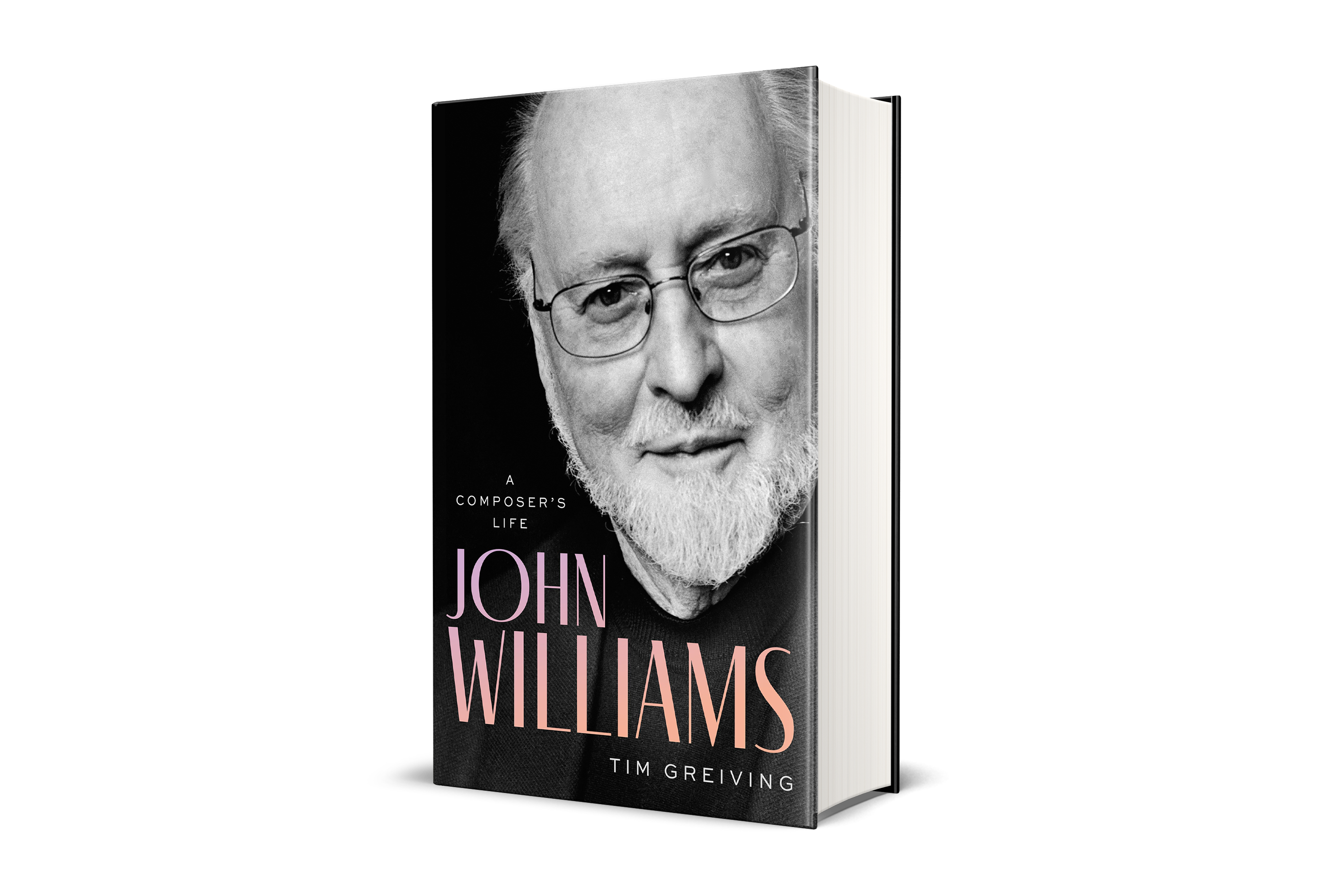
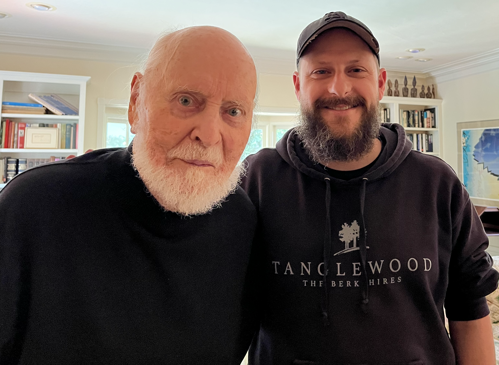
Join us for a special opportunity to meet Tim Greiving, author of the acclaimed biography John Williams: A Composer's Life. Tim will be signing copies of his book prior to the concert and during intermission at The Music of John Williams at The Rady Shell at Jacobs Park.
Books will be available for purchase on-site.
FOR TICKET SERVICE E-MAIL
TICKETS@SANDIEGOSYMPHONY.ORG